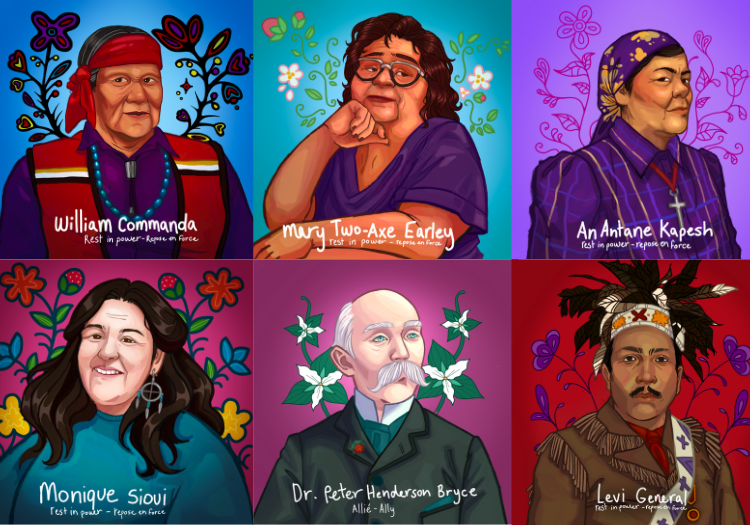
The FNQLHSSC invites you to discover the portraits of iconic figures who have marked the history and life of the First Nations in Quebec and Canada. Dive into the world of the Shadow Warriors, past and present, and explore their lasting influence.
The FNQLHSSC would like to thank Anishnabe artist and illustrator Fabienne Théorêt-Jérôme, from the community of Lac-Simon, for her magnificent works!
Mary Two-Axe Earley
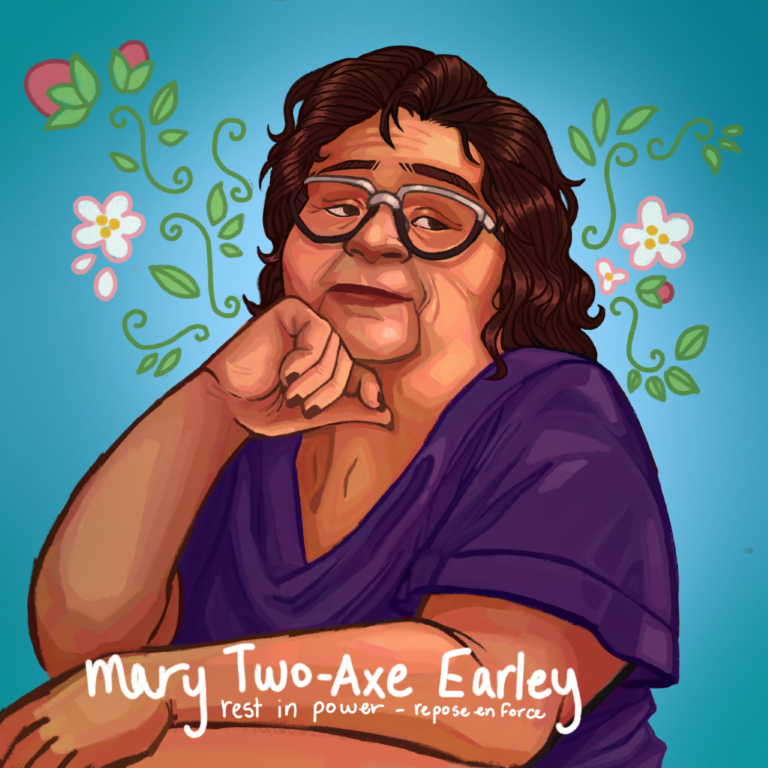
Mary Two-Axe Earley was a Kanien’kehá (Mohawk) activist who fought for the rights of First Nations women for several decades. She made it her mission to challenge the injustices of the Indian Act, which forced First Nations women to relinquish their status when they married non-Indigenous men. Her efforts were rewarded in 1985 with the passing of Bill C-31. il A founding member of the Quebec Native Women’s Association, she brought international attention to the social and sexual inequalities faced by Indigenous women in Canada.
William Commanda

William Commanda was an activist for First Nations culture and rights at home and around the world, a fervent protector of Mother Earth and a spiritual leader. AAmong his many accomplishments, he was Chief of the Kitigan Zibi community from 1951 to 1970, an Officer of the Order of Canada in 2008 and founder of the group A Circle of All Nations. nGuardian of several wampum shell belts of priceless historical and spiritual value, he also mastered the art of canoe building and trapping.
An Antane Kapesh

Antane Kapesh was an Innu activist and a pioneer of Native literature in Canada. From 1965 to 1967, she became the first female chief of the Matimekosh community. Through her autobiographical essay Eukuan nin matshi-manitu innushkueu / Je suis une maudite Sauvagesse published in 1976, she vigorously denounced colonialism and its impacts, as well as the social inequalities suffered by First Nations.A true pillar of Innu culture, she wrote children’s books in Innu-aimun and inspired many writers, poets and artists of subsequent generations.
Peter Bryce

Peter Bryce was a pioneer of public health and health policy in Canada.A valuable ally, he devoted part of his life to improving the living and health conditions of First Nations and Inuit people in this country. Many of his reports openly denounced the abuse suffered by children attending residential schools, as well as the responsibility of the federal government. He also fought long and hard against the alarming rates of tuberculosis mortality within the communities.
Monique Sioui
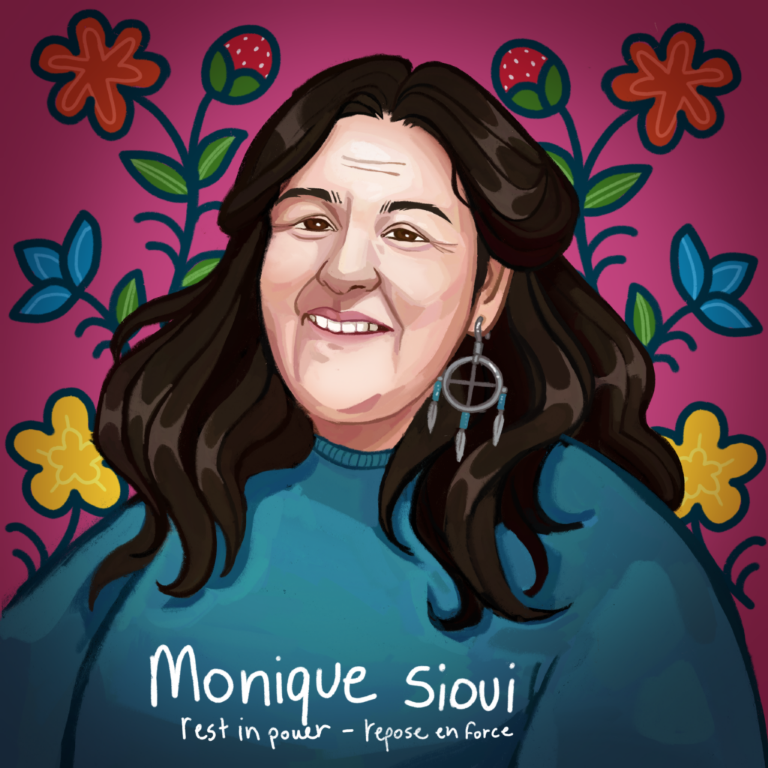
Born of Abenaki and Wendat parents respectively, Monique Sioui was an ardent campaigner for the rights of First Nations women and children. Founder of the Quebec Native Women’s Association, of which she was president in 1976, she initiated an inquiry into the discriminatory sections of the Indian Act against women, and travelled as far as the Netherlands to assert her convictions. She dedicated her life to improving living conditions, fighting on many fronts: the status of women, neglected children, discrimination and domestic, sexual and marital violence. Thanks to her many accomplishments, she also helped build a cultural bridge between First Nations and Quebecers.
Levi General

Levi General (Deskaheh) was a proud representative of the Six Nations Hereditary Council and a dedicated activist for First Nations self-determination. Endowed with unfailing perseverance and rare eloquence, he was determined to have the autonomy and sovereignty of the Six Nations recognized by the international community. In 1923, when the Canadian government attempted to depose the Hereditary Council, he took steps, not without setbacks, to have the Six Nations recognized as an independent state by the League of Nations in Switzerland. He died in exile in the United States, as he would have been imprisoned had he returned home.